Take Sailing to the Next Level
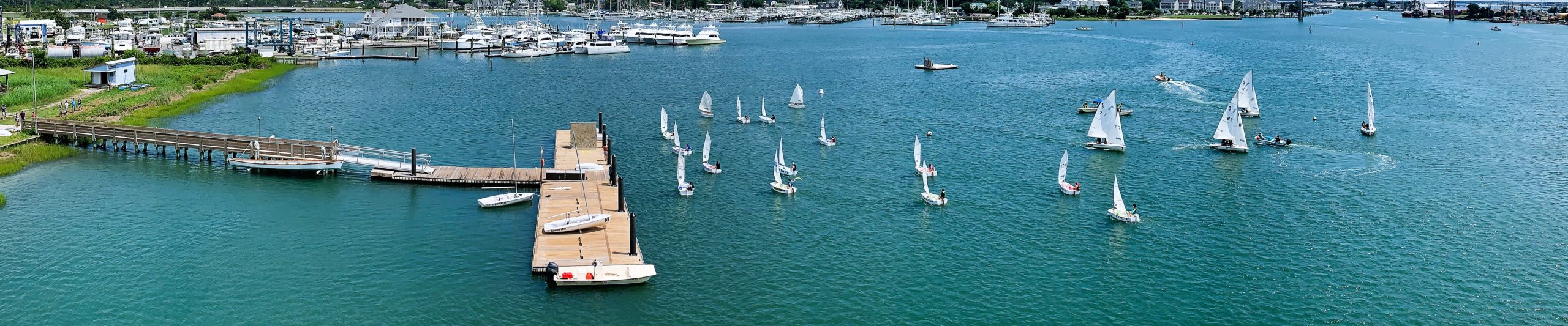
The Youth Sailing Team gives intermediate sailors the opportunity to build confidence, refine racing skills, work as a team, and compete in regional regattas.
A Members-Only Sailing Program
Youth Sailing Team participants must have a current household membership with the Friends of the North Carolina Maritime Museum.
From Recreational Sailing to Competitive Racing
Designed for young sailors who are ready to grow beyond introductory instruction and develop competitive sailing skills.
The Youth Sailing Team builds upon the skills young sailors gain through the Friends’ Junior Sailing Program or another recognized sailing program.
Sailors practice aboard Friends-owned boats at Gallants Channel in Beaufort and may compete in regional regattas. Coaching emphasizes teamwork, boat handling, strategy, sail trim, racing rules, fitness, responsibility, and good sportsmanship.
Build Racing Skills
Develop boat speed, starts, mark roundings, tactics, strategy, and knowledge of racing rules.
Strengthen Teamwork
Learn communication, division of responsibilities, trust, and cooperation aboard a two-person sailboat.
Compete Regionally
Team members may have opportunities to participate in regional regattas and other competitive events.
Grow in Confidence
Competitive sailing develops resilience, critical thinking, physical fitness, leadership, and self-reliance.

The Team Experience
Youth Sailing Team members train in an inclusive, supportive, and challenging environment. Sailors are grouped according to skill level and experience so that practices remain focused, productive, and safe.
- Builds teamwork and lasting friendships
- Develops physical fitness and critical thinking
- Encourages responsibility and good sportsmanship
- Provides additional maritime education opportunities
- Creates a pathway toward high school and college sailing
- Develops lifelong skills and a lasting love of sailing
Who Can Join the Team?
The Youth Sailing Team is intended for sailors with intermediate sailing skills who are ready to participate in a structured and competitive team environment.
Grades 6–12
Sailors must be actively enrolled in grades 6 through 12. Competitive opportunities may be more limited for middle-school participants.
Intermediate Skills
Participants should have previous sailing experience and be comfortable independently handling a small sailboat before joining race-team practices.
Size and Maturity
Sailors should weigh at least 90 pounds and demonstrate a maturity level compatible with older middle-school and high-school students.
Not sure whether your sailor is ready? Contact the Friends at [email protected] or 252-728-2762 . Final participation and placement are based on experience, skill, size, maturity, safety, and coaching assessment.
Practices and Competitive Opportunities
Sailing practices are generally scheduled during the spring and fall, with additional coaching or regatta opportunities potentially available during the summer.
Focused Team Practices
Sailors are grouped according to experience and skill level. Practices may include rigging, sail trim, boat speed, starting sequences, tactical decision-making, mark roundings, and racing rules.
Sailing is a competitive sport. Team members are expected to attend consistently, work hard, care for equipment, support their teammates, and contribute to the team’s success.
Regional Regattas
Team members may have opportunities to participate in regional regattas. The number and location of events depend on schedules, sailor readiness, coaching availability, transportation, weather, and program resources.
Additional class memberships or association memberships may be required for certain Junior Olympic, regional, or national-level events.
Racing the Collegiate 420
Youth Sailing Team members primarily sail Collegiate 420s. The Collegiate 420 is a two-person dinghy widely used in high-school and college sailing programs.
Sailing a 420 requires the skipper and crew to communicate clearly, divide responsibilities, adjust sail trim, set up the rig, read wind and water conditions, and make tactical decisions together.
Donors and sponsors previously provided $25,000 to purchase a fleet of six used Collegiate 420s for the Youth Sailing Team and Junior Sailing Program.
Depending on training needs and availability, sailors may also practice aboard O’pen Skiffs, Sunfish, or other suitable boats.
More Than a Race Team
The Youth Sailing Team advances the Museum’s educational mission while creating meaningful opportunities for young people and their families.
Develops practical watermanship and seamanship skills
Provides additional educational opportunities
Creates access to a challenging and inclusive sport
Encourages safe enjoyment of the coastal environment
Builds confidence, friendships, and teamwork
Provides a pathway toward high-school and college sailing
Connects sailors with other sailing families and mentors
Supports local tourism through practices and regattas
Membership Is Required
The Youth Sailing Team is a fee-based program available to current Friends of the North Carolina Maritime Museum members.
Membership supports educational programs, fleet maintenance, maritime preservation, exhibits, and community opportunities throughout the year.
Help Make Competitive Sailing Accessible
Scholarships, sponsorships, participant fees, and community support help sustain the team and keep opportunities available to young sailors.
Scholarship Assistance
Program dues are kept as accessible as possible, and financial assistance may be available for sailors who need support.
Scholarship inquiries are handled privately and should be directed to the Friends office.
Sponsor the Sailing Team
Sponsorships and donations help maintain the fleet, replace sails and equipment, provide insurance, support coaching, and improve the infrastructure used by the sailors.
Your support helps young sailors develop skills and confidence while representing Beaufort throughout the regional sailing community.
Ready to Join the Crew?
Contact the Friends to learn more about upcoming practices, participation requirements, program fees, skill assessments, scholarships, and competitive opportunities.